A sustainability‑minded approach to in‑store execution: fewer trips, fewer repeat visits, and more impact per mile
Earth Day is a reminder that sustainability isn’t a single initiative—it’s a set of daily choices that compound over time. For consumer brands, retail teams, and field organizations, some of the most practical sustainability wins come from something unglamorous but highly measurable: reducing unnecessary miles, eliminating wasted store visits, and preventing product loss at the shelf.
The business case is the same as the sustainability case. When field teams drive less and fix the right issues the first time, everyone wins. Reps spend fewer hours on the road, brands get more consistent execution, and retailers see fewer avoidable gaps that lead to markdowns or missed sales.
The Hidden Sustainability Problem: Wasted Miles and Repeat Visits
Retail execution often creates invisible waste. Not waste in the warehouse sense, but waste in time, miles, and effort:
- Routes built around static store lists instead of real‑time need
- Long drives to low‑priority stores while high‑impact issues wait
- Repeat trips because the right task wasn’t deployed at the right time
- Late detection of on‑shelf gaps that can lead to missed sales or avoidable product loss
What would happen if retail execution was designed to minimize waste by default—starting with the miles we ask field teams to drive?
Survey’s Sustainability Lens: More Impact Per Mile
Sustainability doesn’t have to mean adding complexity. Often, it means designing operations that avoid unnecessary work.
Survey’s model focuses on execution efficiency, so brands can get the shelf right with fewer miles driven and fewer “do‑over” visits.
1. Predictive Routing: Fewer Miles, Smarter Coverage
Every mile counts—for cost, for time, and for environmental footprint. Survey’s AI‑driven predictive routing reduces unnecessary travel by prioritizing the stores where execution will matter most and clustering work to minimize distance.
- Prioritize high‑impact locations instead of servicing every store the same way
- Reduce drive time with intelligent clustering and route optimization
- Increase consistency of coverage without increasing total miles
2. Dynamic Tasking: Fix the Right Thing the First Time
Reducing miles is only half the equation. The bigger sustainability win comes from avoiding repeat visits altogether by deploying the most relevant actions at the moment they’ll have the greatest impact.
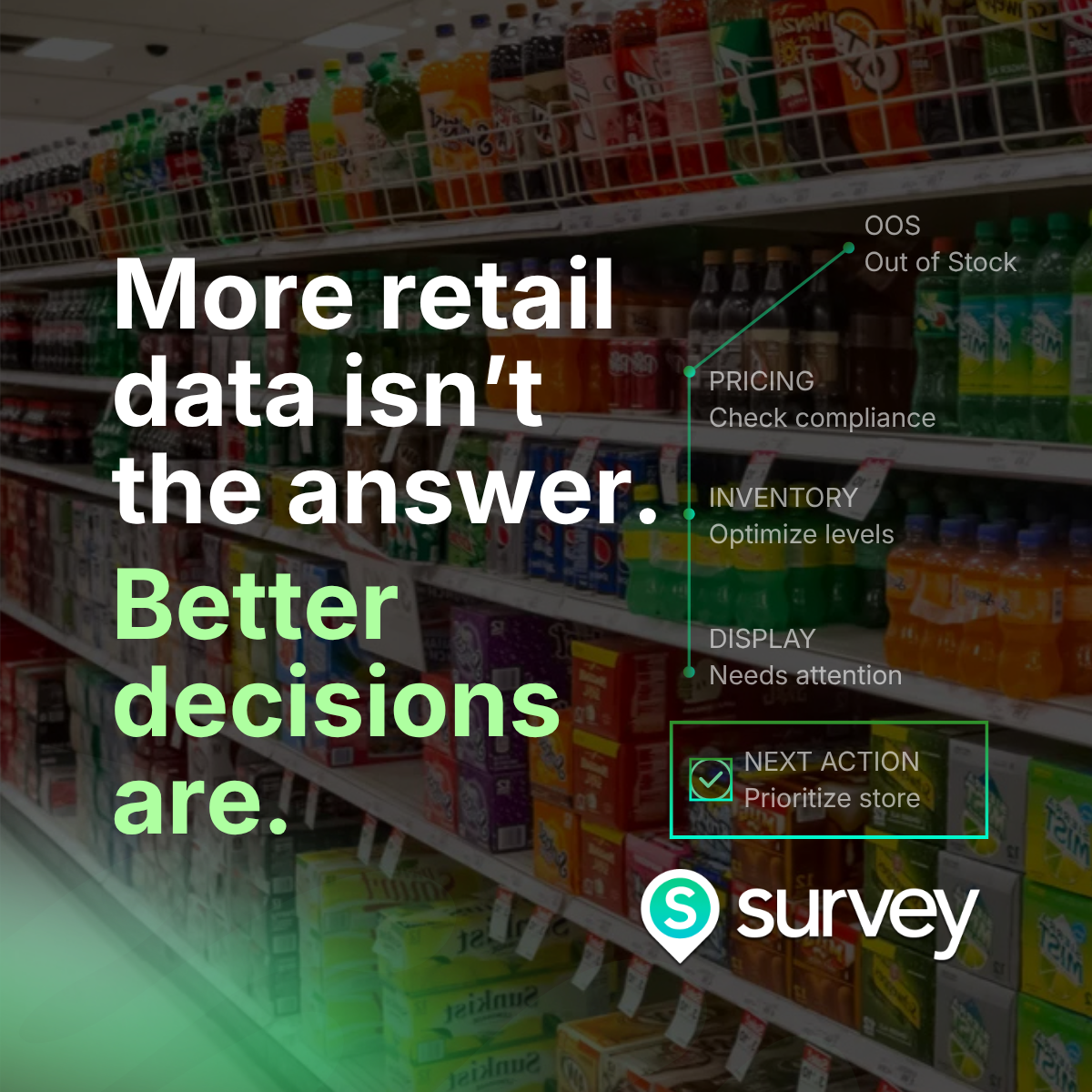
Survey AI continuously evaluates in‑store signals and triggers work in real time, so field teams aren’t guessing what to do once they arrive. Common focus areas include:
- Out‑of‑stocks and shelf voids
- Pricing and promotion execution issues
- Display gaps and compliance problems
- Store‑level trends that signal recurring opportunity or risk
The result: fewer wasted trips, fewer “return‑to‑fix” visits, and faster resolution of shelf conditions that can contribute to avoidable markdowns or product discard.
3. Audits + Tasks + Coverage: A Closed‑Loop System That Reduces Waste
Sustainability efforts break down when teams can’t see what happened, what changed, and whether it stuck. Survey connects audits (visibility), tasks (action), and coverage (scale) into a single closed loop, so issues are detected earlier, resolved faster, and not repeated week after week.
- Faster detection of shelf issues through consistent, validated visibility
- Faster resolution with targeted tasks based on real conditions
- More consistent execution without expanding travel or adding low‑value visits
Why This Matters on Earth Day (and the Other 364 Days)
In retail, sustainability is often framed around packaging, materials, or manufacturing. Those matter. But operational sustainability matters too—especially when execution spans thousands of stores and depends on thousands of trips.
By optimizing where teams go, what they do, and how quickly issues get resolved, Survey helps brands cut inefficiency at the source—reducing wasted miles and preventable rework while improving on‑shelf performance.
Final Takeaway
Sustainability and efficiency aren’t competing goals.
When you build execution around impact per mile, you get both.