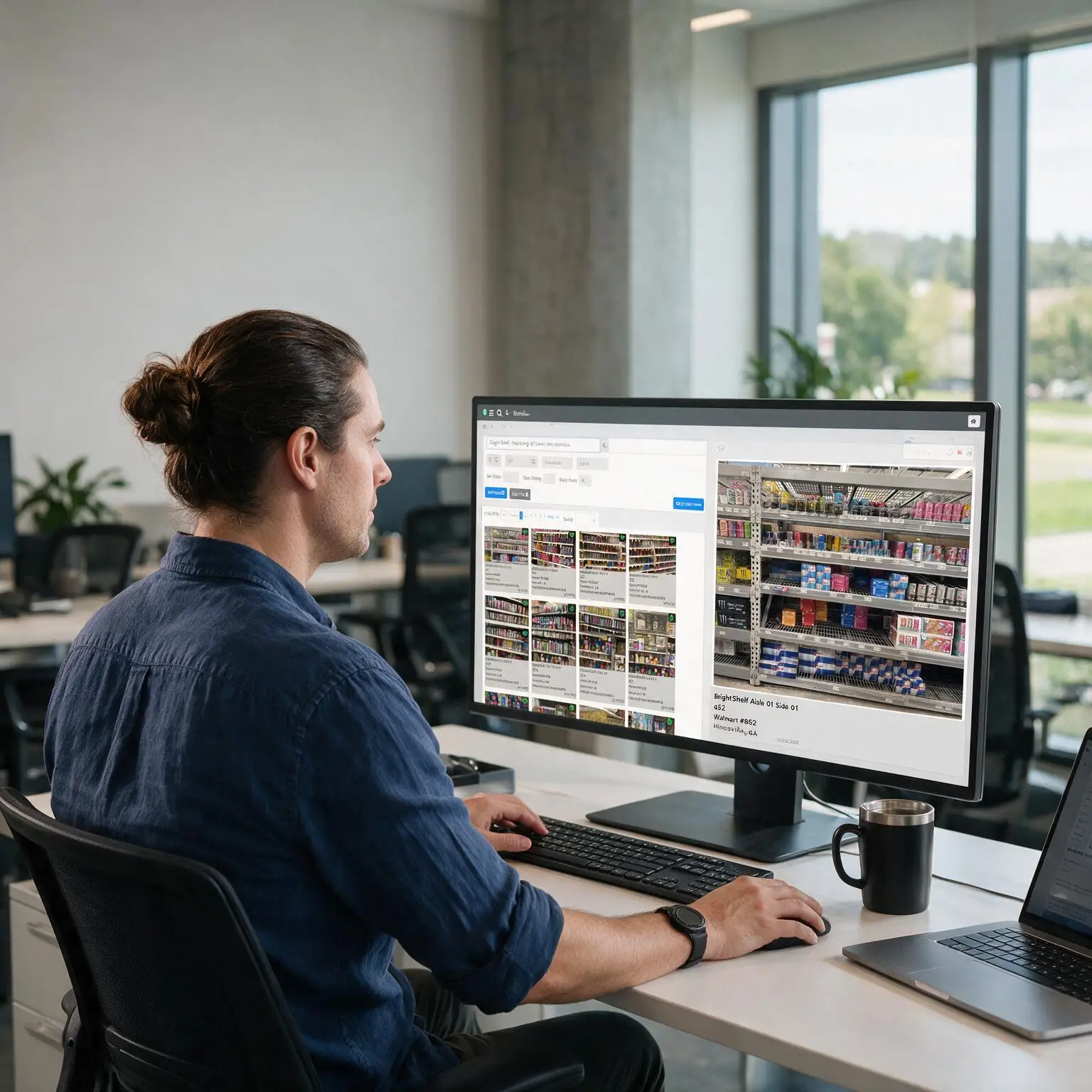

Why brands need store signals, not just sales signals
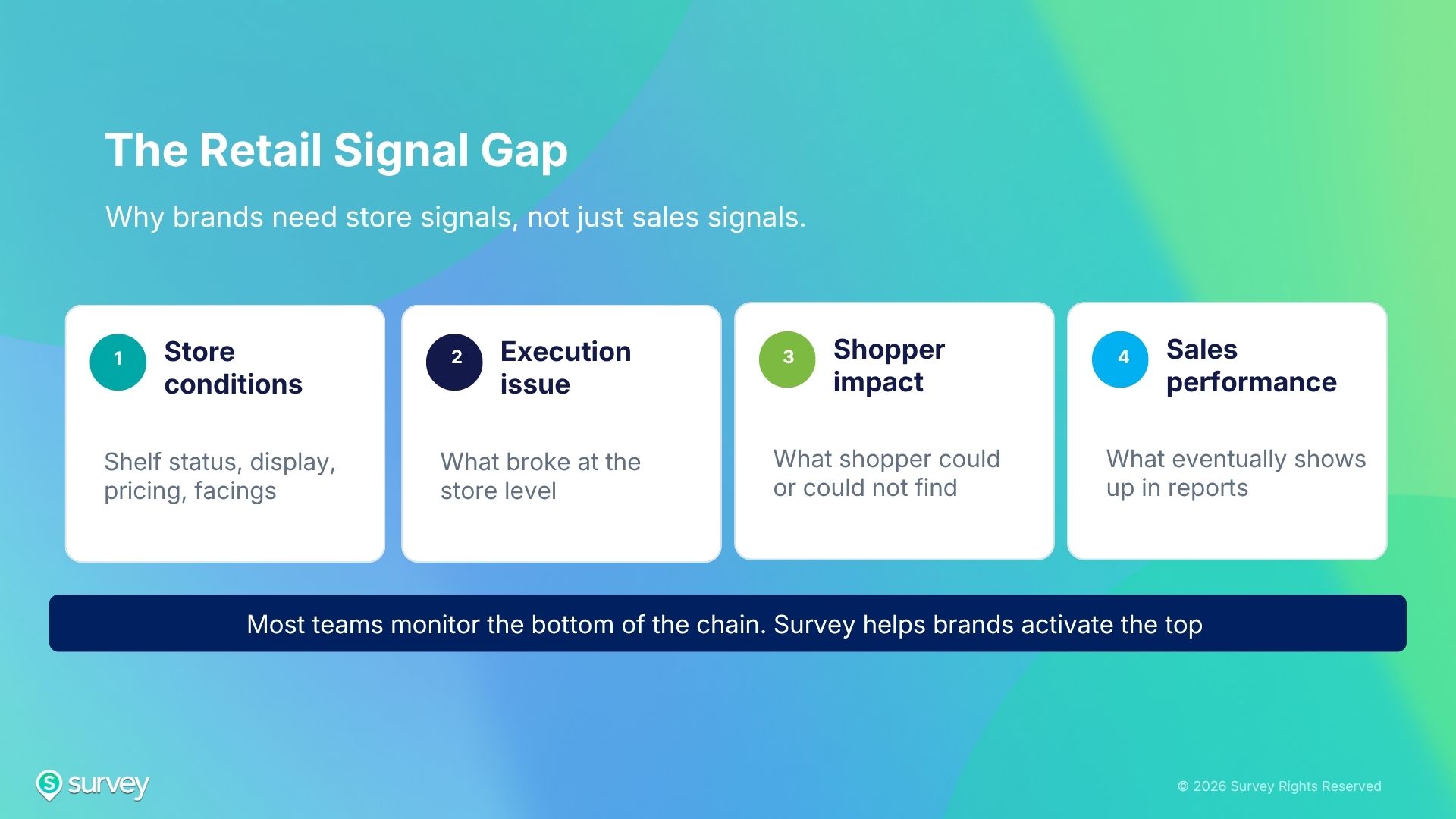
Every brand has sales data.
Many have shipment data.
Some have retailer reporting.
A few even have product presence data from Image Recognition (IR) audits.
Yet despite having more data than ever, brands still struggle to answer a surprisingly simple question:
Why did performance break?
Consider two stores.
Store A sold zero units of your product last week.
Store B sold zero units of your product last week.
From a sales report, they appear identical.
But the reality inside those stores may be completely different.
The sales result is the same.
The cause is not.
And if the cause is different, the action required to fix it is different.
That is one of the biggest challenges in modern retail execution.
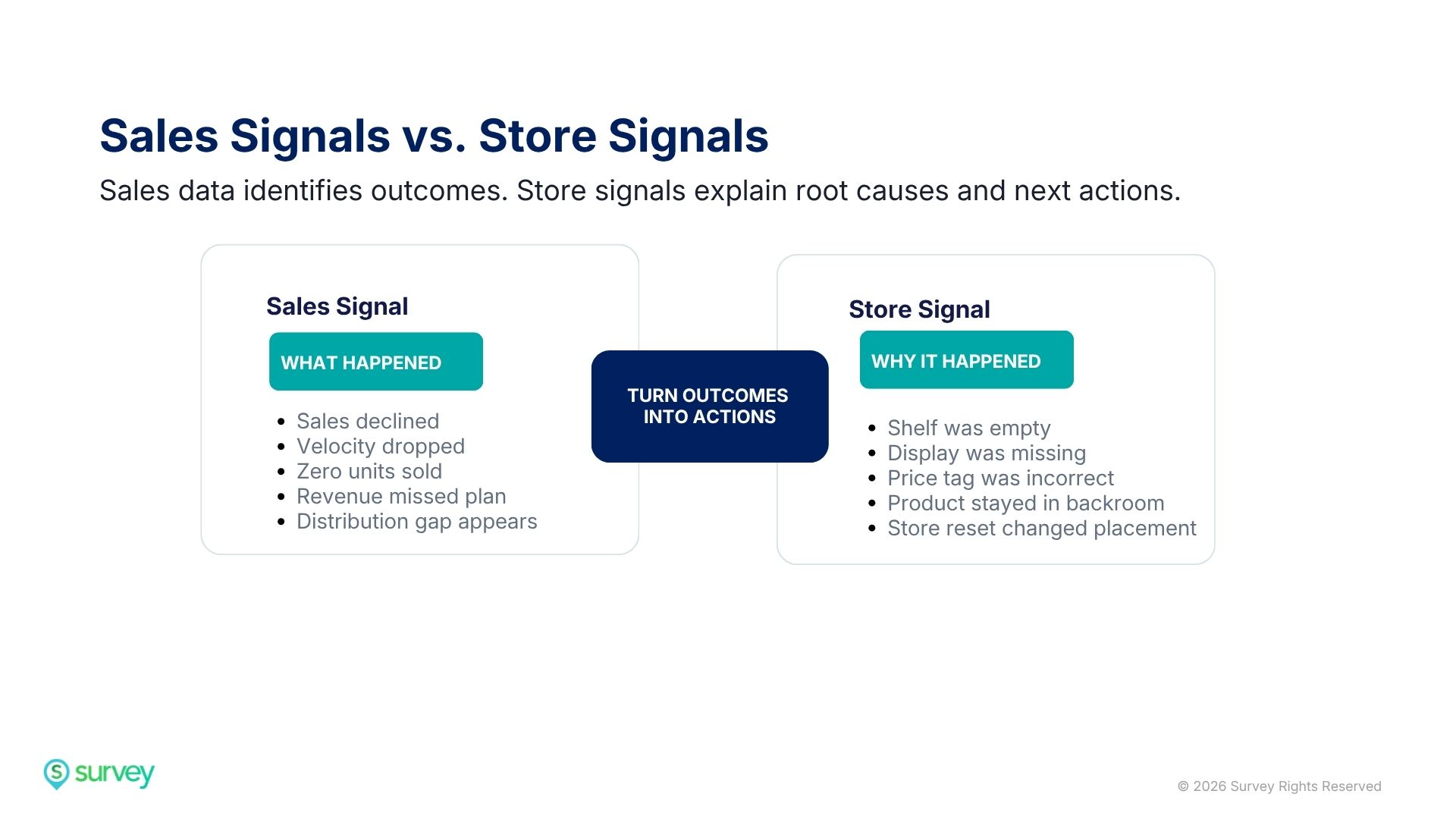
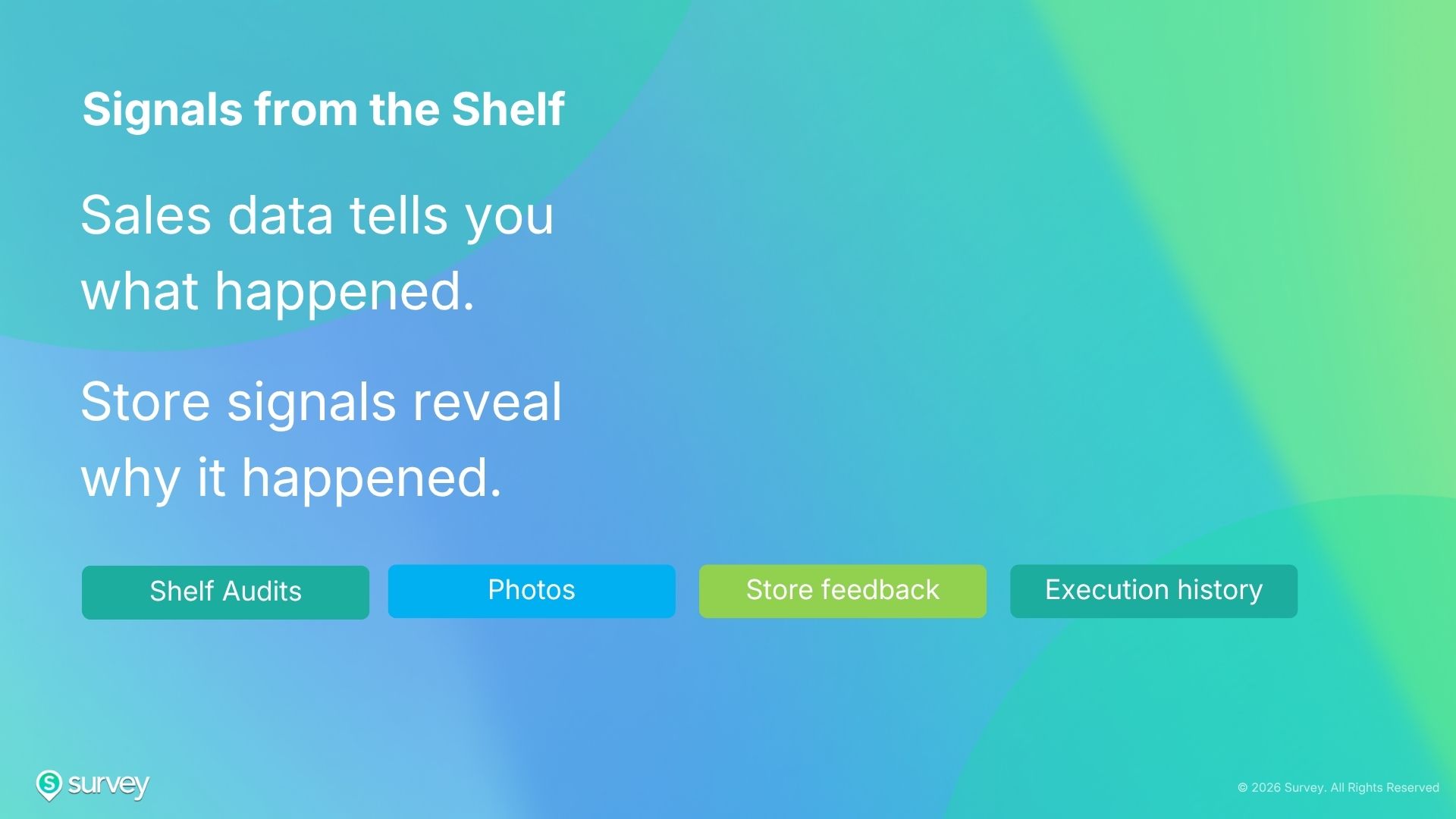
Sales data shows what happened.
Store signals reveal why it happened.
Many retail teams wait until sales decline before investigating a problem.
The challenge is that sales are often a lagging indicator.
By the time revenue drops, the issue may have existed for weeks.
Think about the signals that frequently occur before sales decline:
Each of these events occurs before a sales report reflects the impact.
In many cases, by the time the business notices a sales issue, shoppers have already encountered the problem.
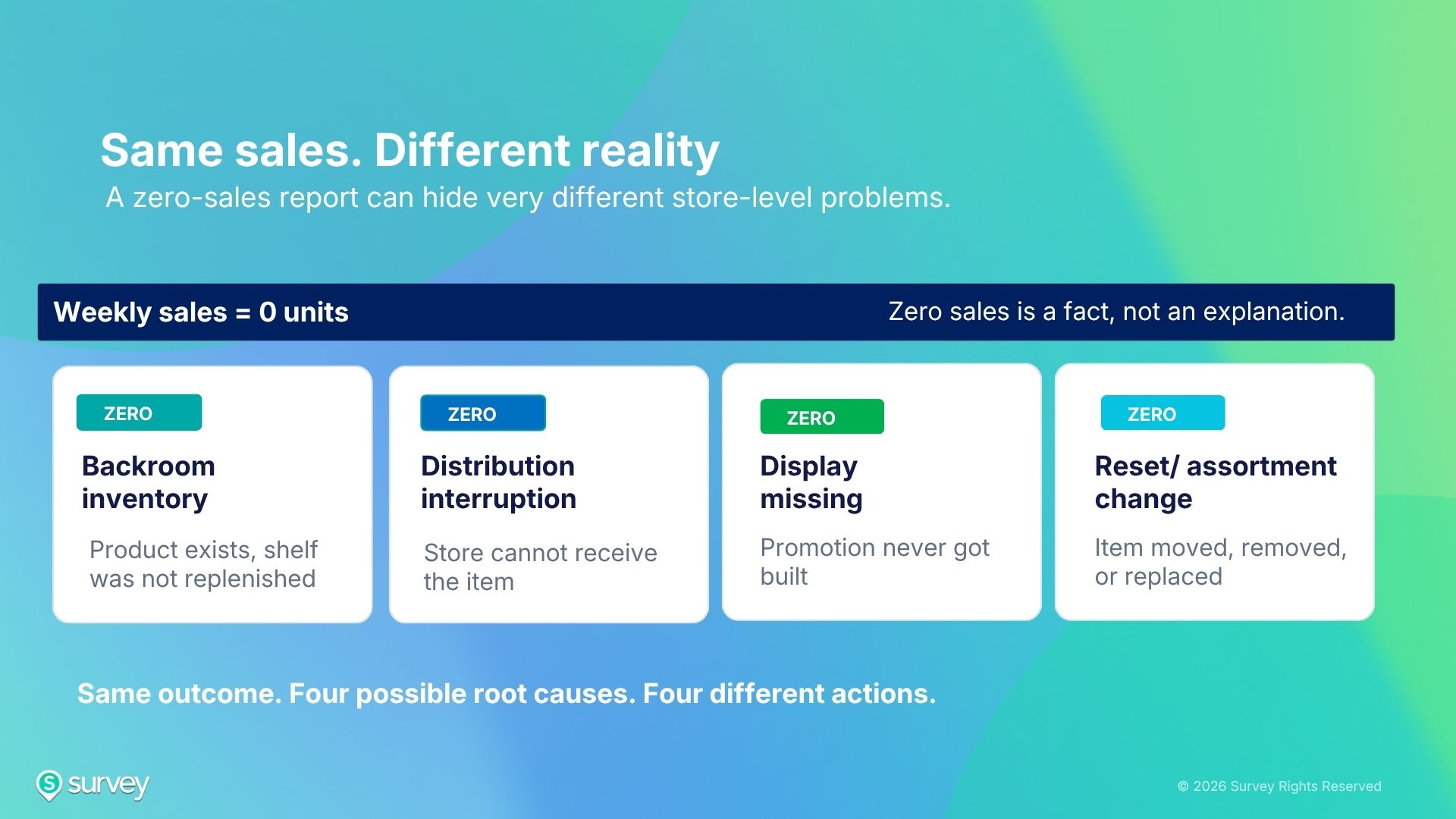
In other words:
Store condition
        ↓
Execution issue
        ↓
Shopper impact
        ↓
Sales impact
Most organizations spend significant time monitoring the bottom of this chain.
The opportunity is monitoring the top.
Every retail visit generates information.
Historically, many of these inputs have been treated as project outputs rather than strategic data assets.
A completed audit becomes a report.
A photo becomes documentation.
A survey response gets archived.
A store visit gets marked complete.
But what if these observations were treated as signals instead?
For example:
| Observation | Signal |
|---|---|
| Shelf empty | Out-of-stock risk |
| Product missing from planogram | Execution gap |
| Display not built | Activation failure |
| Competitor gained facings | Share-of-shelf loss |
| Pricing discrepancy | Compliance risk |
| Inventory in backroom | Replenishment opportunity |
Individually, these observations may seem small.
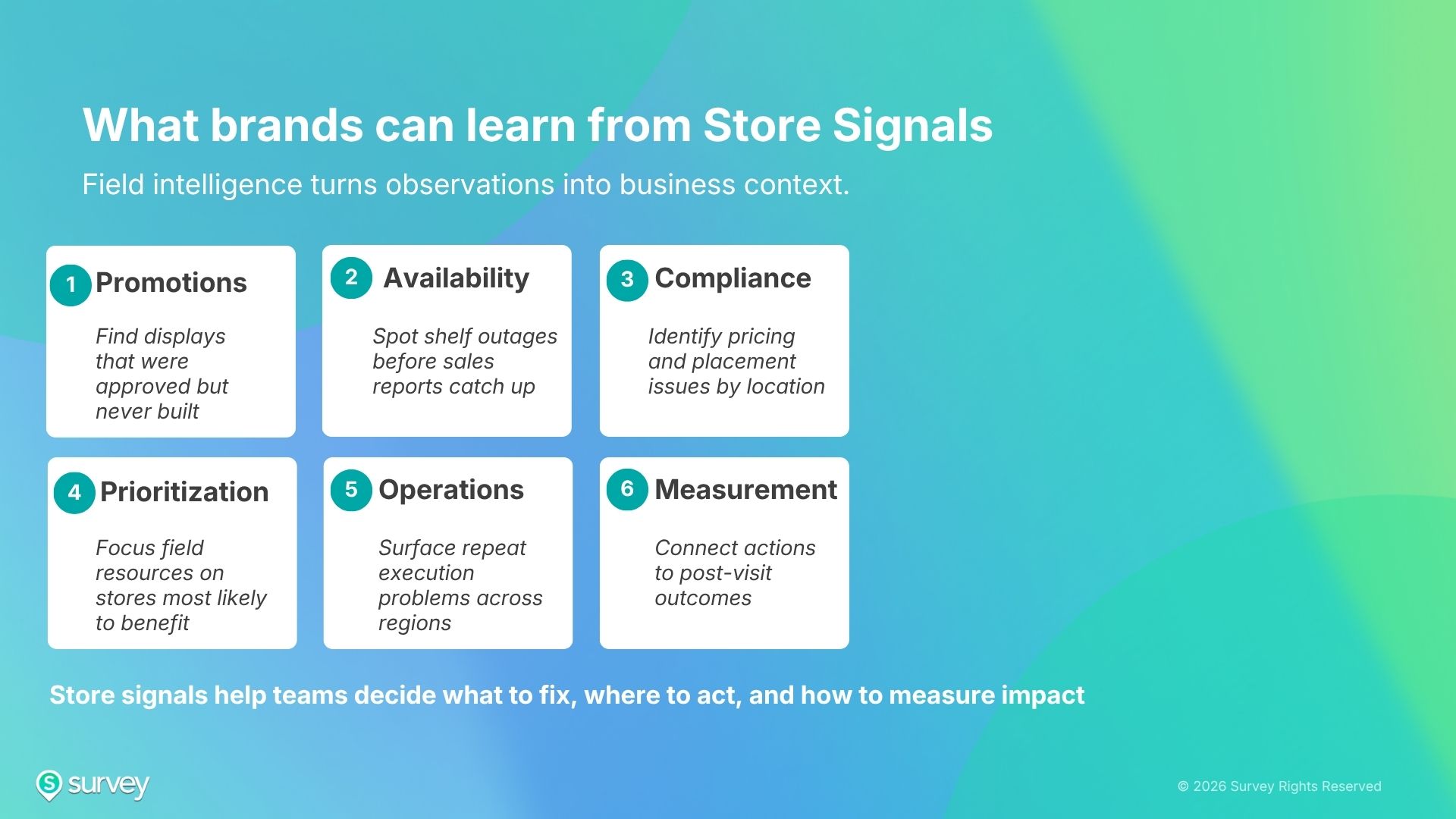
Collectively, across thousands of stores, they reveal where performance is breaking and where opportunity exists.
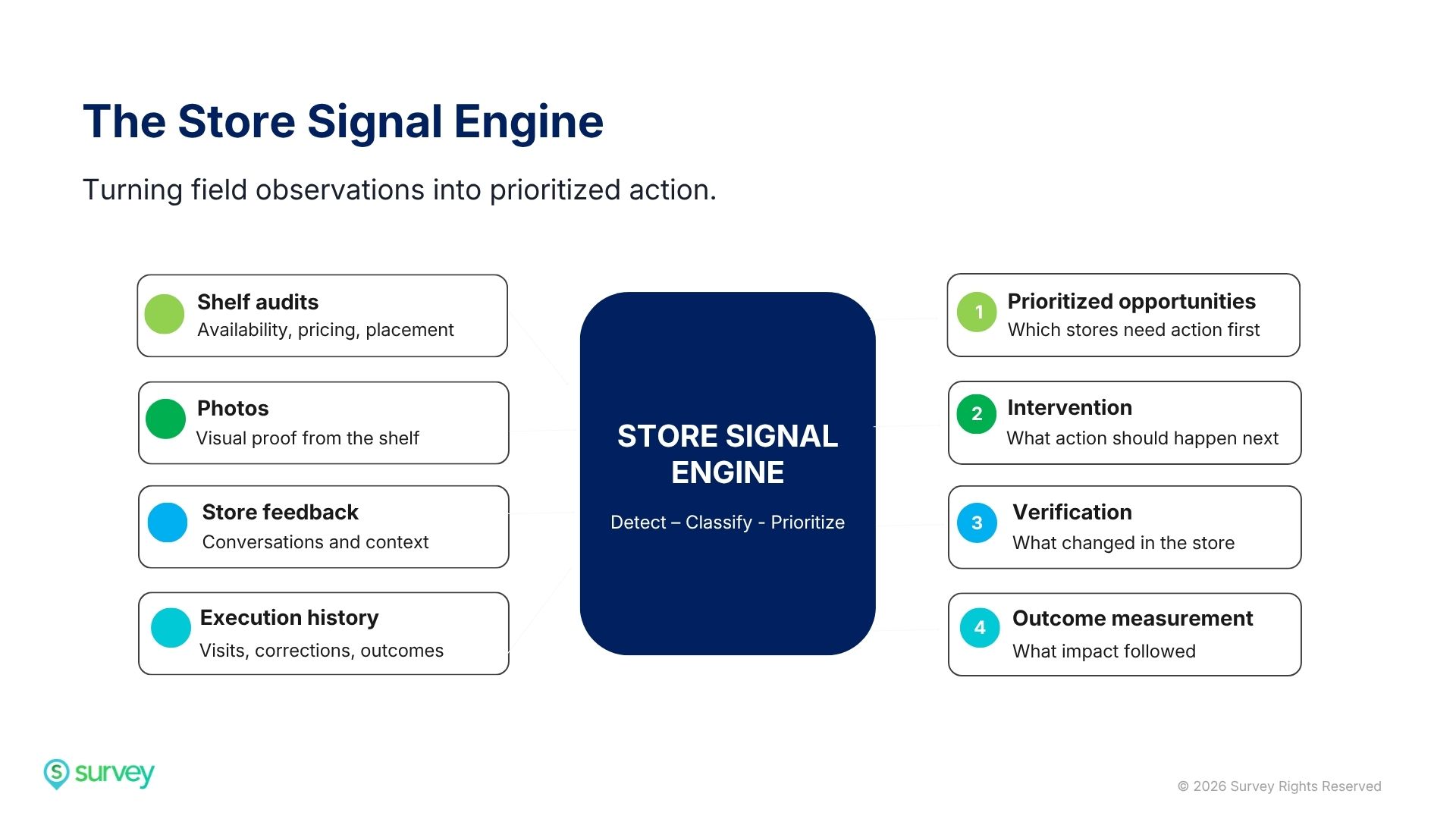
Within the Retail Performance Suite, we think about these observations as store signals.
A store signal is any piece of field intelligence that helps explain the relationship between what is happening in-store and what is happening in performance data.
Not all signals are equally important.
Some indicate normal variation.
Others point to meaningful revenue opportunities.
The role of a Signal Engine is to identify, organize, and prioritize those opportunities.
Conceptually:
Shelf audits
Photos
Store feedback
Execution history
        ↓
Store Signal Engine
        ↓
Prioritized opportunities
        ↓
Intervention
        ↓
Verification
        ↓
Measurement
Instead of asking teams to manually analyze thousands of observations, the system focuses attention on the stores most likely to benefit from intervention.
The goal is simple:
Help brands know where to act first.
Many retail technology platforms are built around visibility.
Visibility is important.
But visibility alone rarely changes an outcome.
A dashboard can identify a problem.
A report can quantify a problem.
A scorecard can summarize a problem.
None of those things resolve it.
The next step matters.
When a signal identifies:
The objective is not simply to report it.
The objective is to activate the appropriate response.
This is where intelligence and execution must work together.
One of the most underutilized assets in retail is execution history.
Each activity generates data.
Over time, that data becomes intelligence.
Patterns begin to emerge.
Questions become easier to answer:
The more observations collected, the more context the organization gains.
The result is a system that becomes smarter over time — not because it generates more reports, but because it learns from what happens in stores.
The purpose of store signals is not to create another dashboard.
The purpose is to connect insight to action.
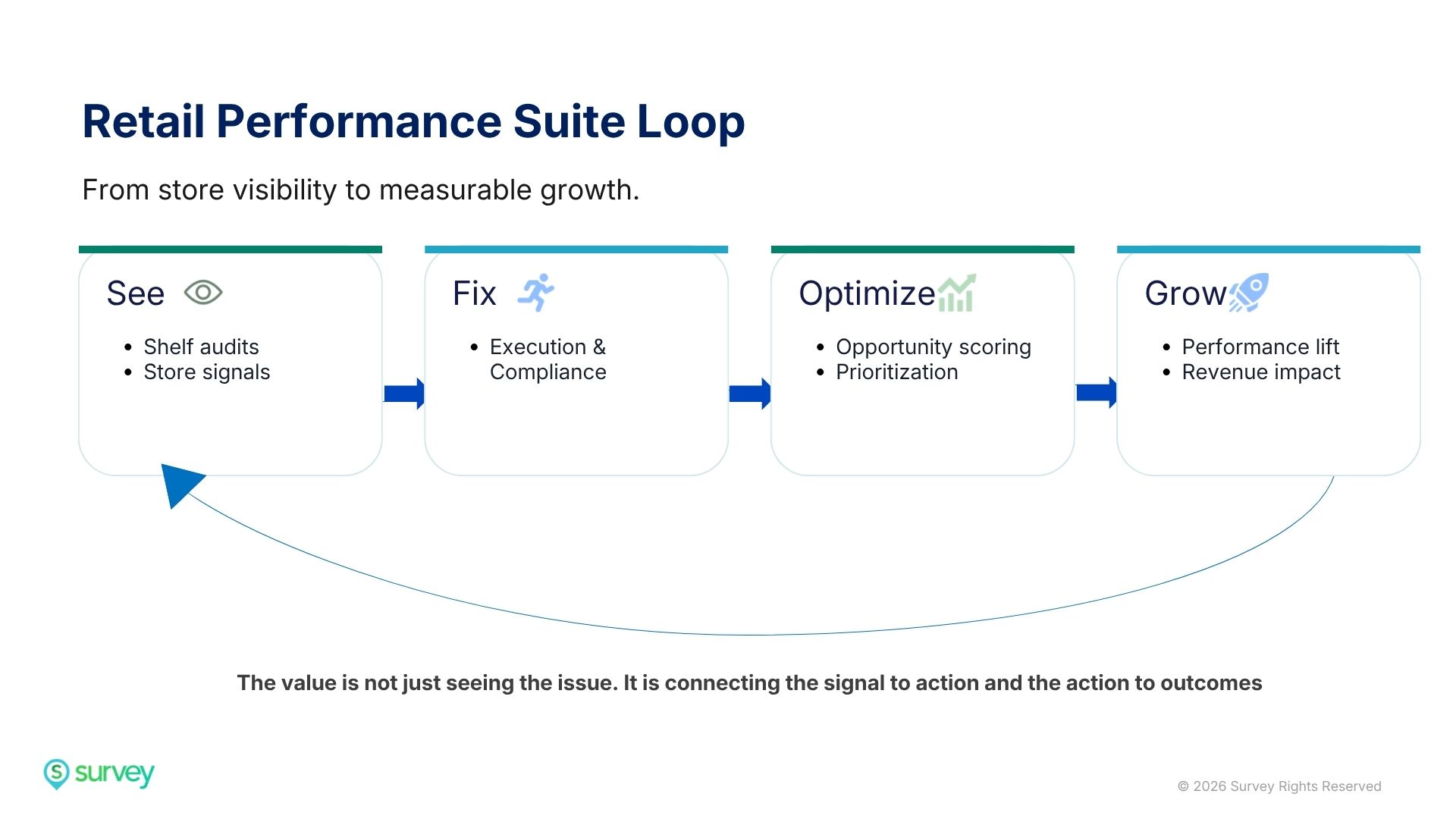
At Survey, we think about retail performance through four connected stages:
Understand what is happening in-store through visibility, audits, photos, and field intelligence.
Address execution issues quickly and consistently.
Prioritize opportunities and focus resources where they will create the greatest impact.
Measure outcomes and improve retail performance.
When these stages work together, organizations move beyond simply reporting problems and begin systematically improving performance.
The retail industry does not have a data shortage.
It has a context shortage.
Most brands already know what happened.
The challenge is understanding why it happened and deciding what to do next.
That requires something beyond sales reports, shipment files, and dashboards.
It requires signals from the shelf.
The future of retail performance will belong to organizations that can connect:
Store visibility
        +
Execution intelligence
        +
Action
        +
Outcome measurement
into a single system.
Because growth does not happen in dashboards.
Growth happens in stores.
And the stores are already telling us what we need to know.
The Retail Performance Suite helps brands connect visibility, execution, optimization, and measurable growth at the shelf.
See what’s happening. Fix what’s broken. Optimize performance. Grow what works.