
How to Choose a Merchandising Partner That Drives Retail Execution ROI
A strong merchandising partner helps brands improve on-shelf availability, increase display compliance, resolve execution issues faster, and capture accurate retail data. When evaluating a merchandising partner, brands should focus on data quality, reporting speed, nationwide coverage, accountability, and the ability to connect retail execution activities to measurable business outcomes.
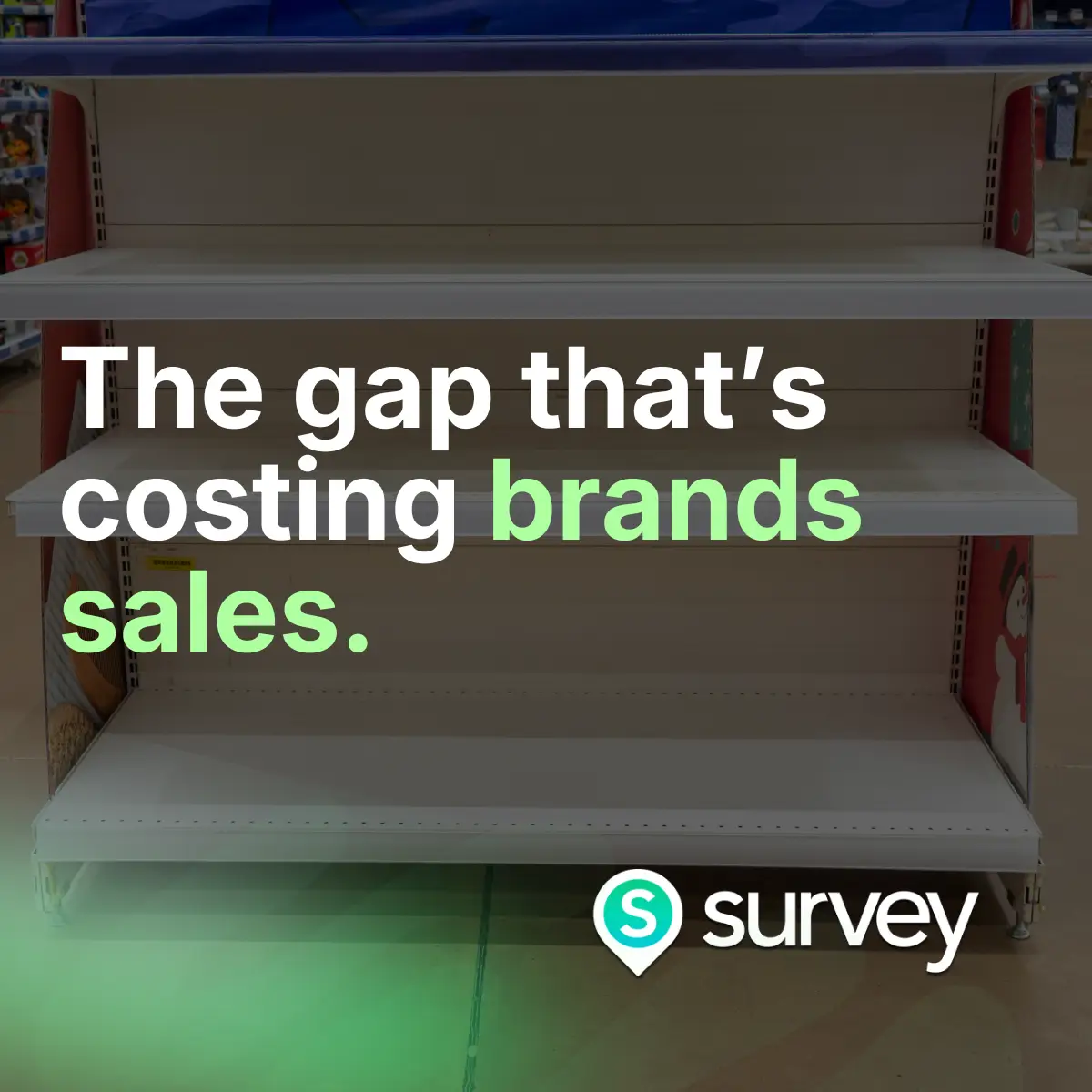
Retail shelves change every day. Products sell out, displays go missing, pricing errors occur, and promotional programs fall out of compliance. The right merchandising partner helps brands identify these issues quickly and take corrective action before sales are lost.
Why Is Choosing the Right Merchandising Partner So Important?
Many brands evaluate merchandising providers based primarily on coverage and store visit volume. While coverage matters, it does not guarantee execution quality or business impact.
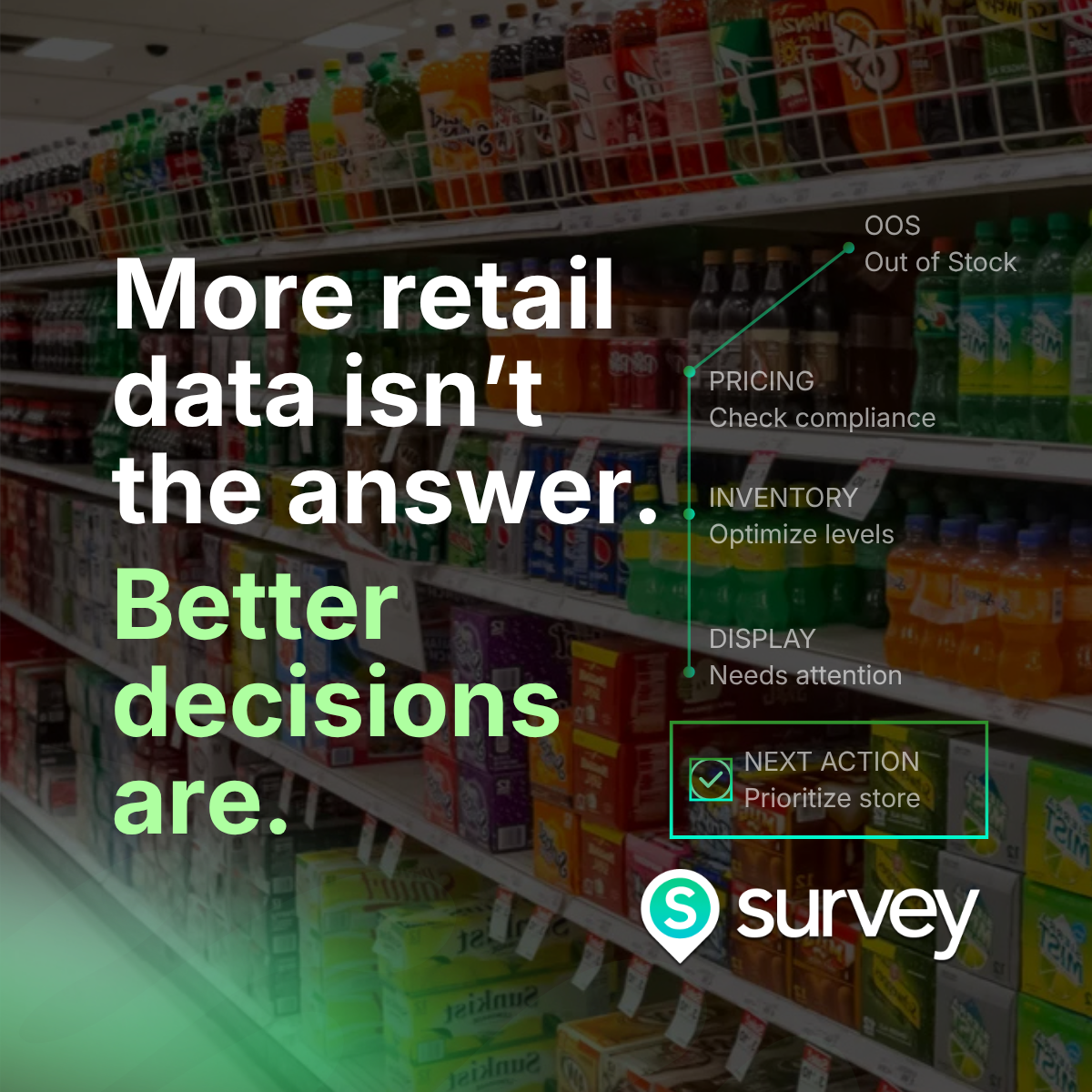
A merchandising partner should provide visibility into what is happening at the shelf and help brand teams act on issues in real time. The best retail execution partners combine visibility with corrective action and measurable accountability.
According to Survey’s National Convenience Benchmark research, execution gaps related to display compliance, pricing accuracy, and product availability continue to impact retail performance across thousands of store visits. These findings align with broader trends discussed by the National Association of Convenience Stores (NACS), one of the leading organizations covering retail execution, merchandising, and convenience retail performance.
What Should You Look for in a Merchandising Partner?
Not all merchandising partners deliver the same level of value. When evaluating providers, consider the following criteria:
The best merchandising partners combine field services with retail intelligence, giving brands the visibility needed to make faster and better decisions.
How Do You Measure Merchandising Partner Performance?
Many providers focus on activity metrics such as completed visits or store coverage. High-performing brands focus on outcomes.
Key performance indicators should include:
Performance should ultimately be measured based on business outcomes, not simply the number of stores visited.
For brands seeking deeper shelf visibility, combining merchandising with retail audits can provide a more complete understanding of store-level execution.
Why Does Data Quality Matter in Retail Execution?
You cannot improve what you cannot see.
Accurate store-level intelligence creates visibility into the conditions that directly affect retail sales. When a field representative identifies an out-of-stock item, missing display, or pricing discrepancy, brands need confidence that the information is accurate and actionable.
Poor-quality reporting often leads to delays, uncertainty, and missed opportunities. High-quality retail intelligence helps brands identify trends, prioritize resources, and improve performance across entire store networks.
One of the most common execution challenges brands face is phantom inventory, where inventory systems indicate products are available even though shoppers cannot find them on the shelf. Frequent store-level auditing and photo verification help uncover these problems before they impact sales.
Can a Merchandising Partner Deliver More Than Store Coverage?
Absolutely.
Today’s leading merchandising providers do much more than execute store visits. They function as an extension of a brand’s retail operations and insights teams.
Retailers and brands are increasingly moving beyond traditional merchandising solutions that focus only on store coverage and task completion. Instead, they are investing in intelligence-driven programs that connect field activity to measurable business outcomes.
A true retail execution partner should help you understand:
This level of visibility transforms merchandising from a field expense into a strategic business investment.
Why More Brands Are Prioritizing Retail Performance
The most successful consumer brands recognize that every store visit generates valuable data.
Modern merchandising programs should provide more than task completion reporting. They should generate the insight needed to improve retailer accountability, optimize field resources, strengthen promotional execution, and drive measurable business outcomes.
By combining nationwide execution with real-time reporting and reliable field data, brands can identify issues sooner, respond faster, and improve overall retail performance across their entire footprint.
As brands seek greater visibility into store-level performance, concepts such as data transparency and supply chain visibility have become increasingly important. Research published by Harvard Business Review highlights how improved visibility helps organizations make faster decisions and respond more effectively to operational challenges.
How Can Survey Help?
Survey helps brands gain real-time visibility into retail conditions through a nationwide network of field representatives and retail intelligence solutions.
From merchandising and audits to display compliance and store-level reporting, Survey helps brands:
For brands seeking to improve execution consistency and retail visibility, choosing the right merchandising partner can have a lasting impact on sales performance and ROI.
Ready to Evaluate Your Merchandising Partner?
Every execution issue represents a potential lost sale.
Survey helps brands identify retail issues faster, improve compliance, and gain the visibility needed to drive stronger in-store performance.
Request a Retail Execution Assessment
Discover how Survey’s nationwide retail execution network and real-time reporting platform can help turn store-level insights into measurable business results.
Give us some info so the right person can get back to you.
Explore Survey’s latest resources that will make a difference