
The reset team says it’s done. The shelf says otherwise.
Winning a spot on the shelf is only the start. Between the category review and the finished shelf sit production, shipping, packaging, and a store-level reset, and even experienced teams get surprised by how much can go wrong along the way. Product arrives late, packaging isn’t ready, or a display never goes up.
The good news is that most of it is predictable, and there’s still time to prepare. Retail buyers and category managers are already making the assortment and shelf-space decisions that will shape stores in early 2027.
The shelf you’ll compete on in Spring 2027 is being planned right now.
This guide walks through five questions to ask before your spring 2027 reset. Whether you’re launching your first item or managing a large portfolio, each one explains what to look for and why it matters, so you can walk into reset season knowing where your brand stands.
Winning authorization during a category review is only the beginning.
The real challenge comes when those decisions move into execution.
Too often, brands invest heavily in planning, only to discover execution issues after shoppers have already encountered empty shelves, missing products, or incomplete resets.
As retailers prepare for the first quarter of 2027, several categories are expected to see heightened planning and reset activity:
For brands competing in these categories, now is the time to understand current shelf conditions and identify execution risks before reset activity begins.
A reset is the moment a retailer changes a category’s shelf layout, adding, removing, or moving products. Being ready for one takes more than a good shelf plan. It depends on four things coming together long before a reset team walks into a store.
Missing any one of these can undo a reset win, so it helps to check all four early. Survey sees the downstream effects often. We’ve been hired many times to go in after a reset and cut in product because a shipping window was missed, and our audits show brands exactly where shelf execution stands before and after a reset.
Not every store performs the same. Each location has its own traffic patterns, category mix, shelf capacity, replenishment rhythm, and history of compliance. Brands that treat every store alike either spend field resources everywhere or default to the biggest stores, and miss the places where execution quietly breaks down.
This is where Survey’s proprietary data comes in. Our Store Signal Engine (Store Profiling) draws on millions of in-store data points from audits, photos, shelf conditions, and field observations. It builds a living profile of every store and scores how likely each one is to experience out-of-stocks, pricing errors, or display non-compliance. Each profile tracks four core signals: Availability, Execution, Consistency, and Issue Recurrence.
Stores are then segmented so teams know where to act:
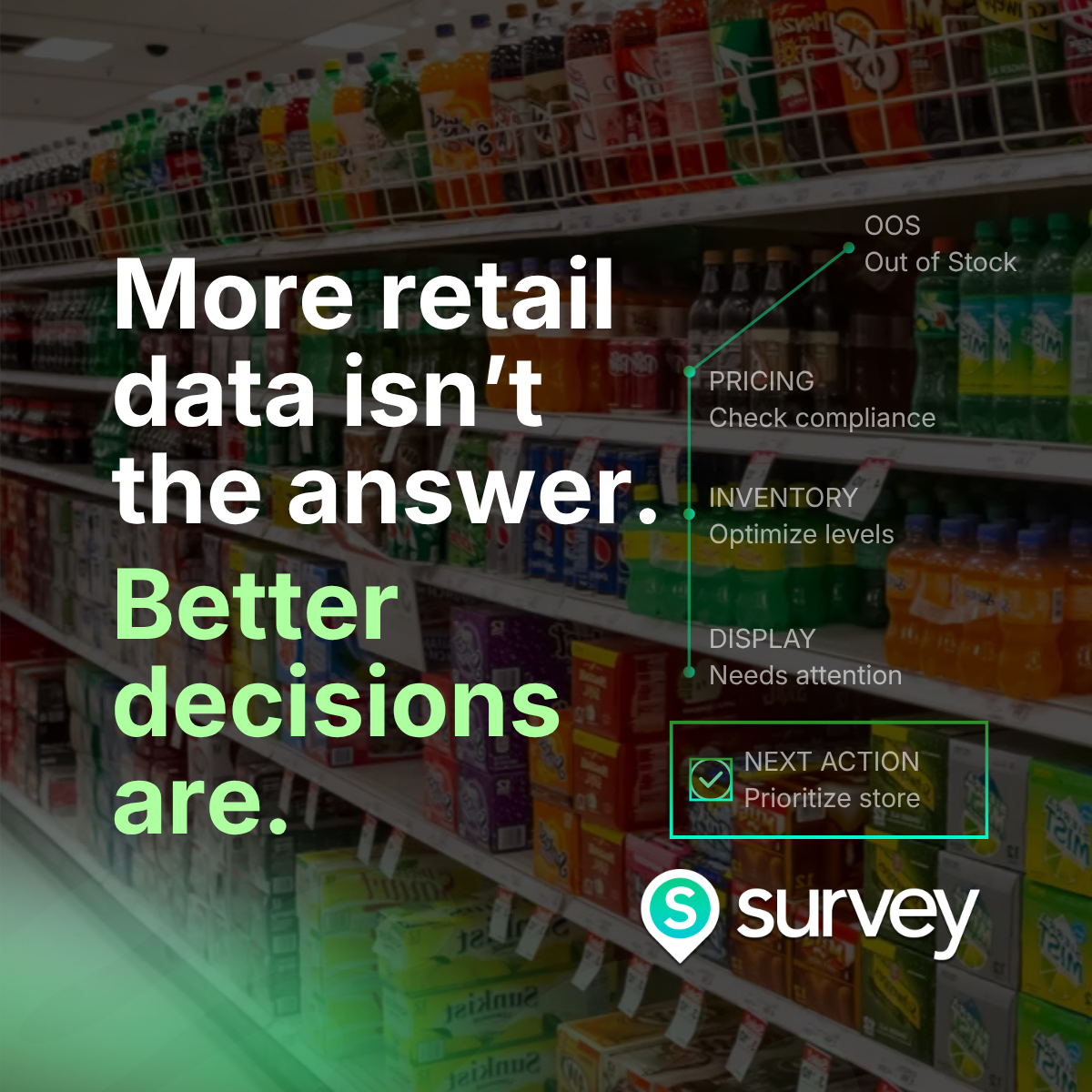
Sales data tells you what happened. Survey’s store intelligence, built from years of store-level execution data, helps predict what happens next, so you can put your reset budget and field resources where they’ll make the biggest difference.
Many resets are marked complete long before they’re actually complete at store level. A reset team may finish the set, but products can still be missing, placed in the wrong spot, or left without the planned display. Without a way to check, the first sign of trouble is often a dip in sales.
Verification means getting proof from the store, such as dated photos, shelf audits, and compliance checks against the planogram, within days of the reset. Survey’s field teams capture photo-verified audits so you can see what’s on the shelf rather than assume.
Finding a problem is only half the job. The longer a gap sits on the shelf, the more sales and shopper trust it costs, so it helps to decide ahead of time who fixes what, and how fast.
Typical fixes include restocking, correcting placement, installing a missing display, or cutting in product that arrived late. Survey connects verification to action, with corrective merchandising teams who can fix issues quickly once they’re found.
The reset is the starting line, not the finish. Shelf conditions drift as stores restock, shoppers move product, and promotions change.
Strong brands keep checking after the reset: follow-up audits, availability tracking, and a review of what is working versus what is slipping. Over time, that history shows which stores and retailers need extra attention.
Survey’s follow-up audits and store profiling build on each visit, so every audit makes the next round of decisions sharper.
Economic uncertainty, evolving shopper preferences, retailer labor challenges, and increasingly complex assortments are making flawless retail execution harder than ever.
Brands need more than periodic store audits.
They need continuous retail visibility into what is actually happening at shelf level.
Understanding where products are available, where compliance issues exist, and where corrective action is needed enables teams to protect their retail investment and maximize performance.
At Survey, we help brands move from planning to execution and from execution to measurable performance.
Through the Retail Performance Suite, brands gain visibility into what is happening at store level, the ability to quickly address issues, and the insights needed to improve execution over time.
Spring may still seem months away, but the decisions that will shape your shelf presence are already being made.
The question isn’t whether your category will change.
The question is whether you’ll have the visibility, execution support, and performance insights needed to win when it does.
Now is the time to prepare.
Retail resets are won long before the shelf is set. The brands that succeed are the ones that understand store conditions, verify execution, and correct issues before they impact sales.
Survey helps brands improve execution through Retail Visibility, nationwide Merchandising Services, and the Retail Performance Suite.
Give us some info so the right person can get back to you.
Explore Survey’s latest resources that will make a difference